
Research is being reconfigured by AI. The challenge now is not only to move faster, but to keep the process grounded, inspectable, and worthy of trust.
State-of-the-art models are rapidly advancing on difficult benchmarks in mathematics, physics, coding, and scientific reasoning. Independent researchers now have access to tools that would have looked like science fiction only a few years ago: long-context synthesis, code generation, retrieval over curated corpora, simulation pipelines, and iterative model-based critique.
This is not a small productivity upgrade. It is a structural shift. A new layer is emerging between idea and paper, between intuition and implementation, between draft and evidence.
At Gauge Freedom, and through systems like Quastra and Intelexta, we are working on a simple proposition:
The new research loop
The old rhythm of research was slower: read, think, derive, test, write, revise. The new rhythm is tighter. A modern research system can generate candidate ideas, retrieve references, run code, draft arguments, critique its own outputs, and revise in loops that happen in minutes instead of weeks.
That acceleration is real. But speed alone creates new failure modes: fluent but weak arguments, plausible but ungrounded citations, hidden leaps in reasoning, and polished drafts that outrun verification.
That is why the research stack now needs more than generation. It needs stewardship: systems that can show what was proposed, what was checked, what changed, and why the final output should be trusted.
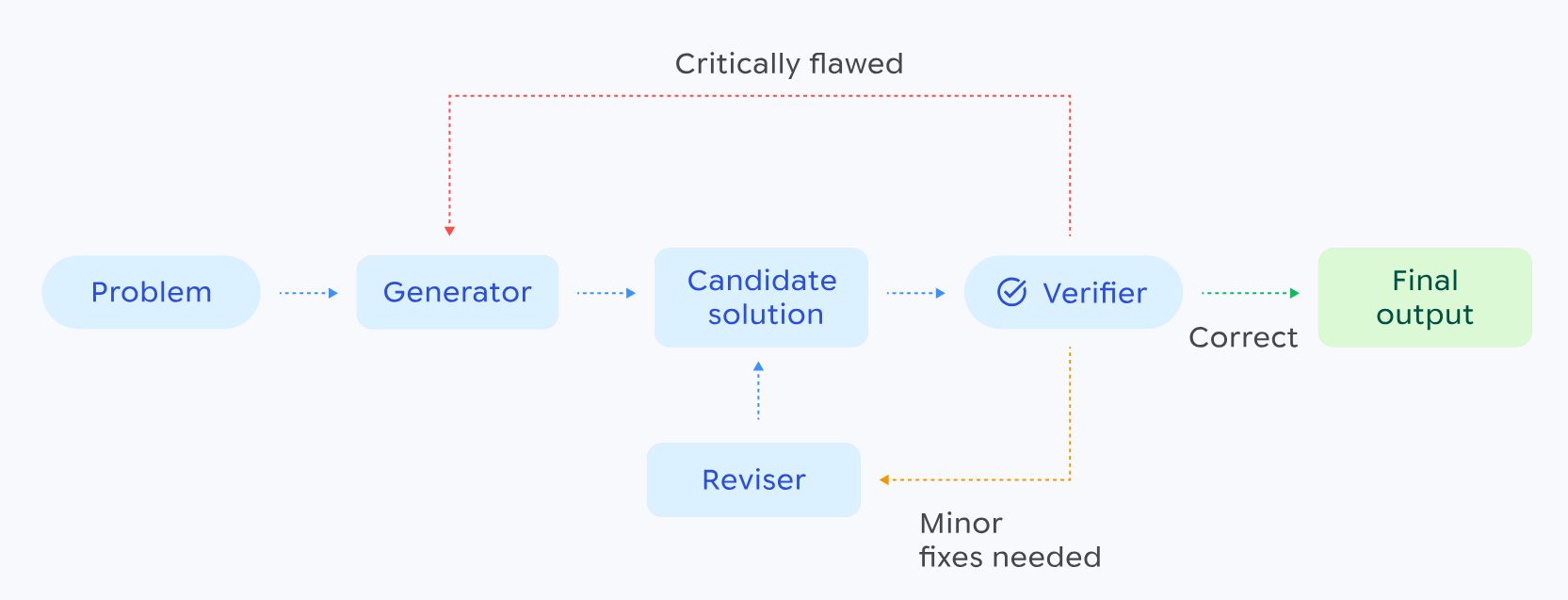
From generation to verification
The important architecture in this new era is not just generation. It is the loop around generation: generate → verify → revise → audit.
That is the direction behind our work: structured evidence grounding, solver-backed research workflows, integrity analysis, and durable provenance artifacts that make the process more legible later.
This is the difference between a research assistant and a research process.
What Quastra is becoming
Quastra is our physics-native research engine for verification, simulation, and discovery.
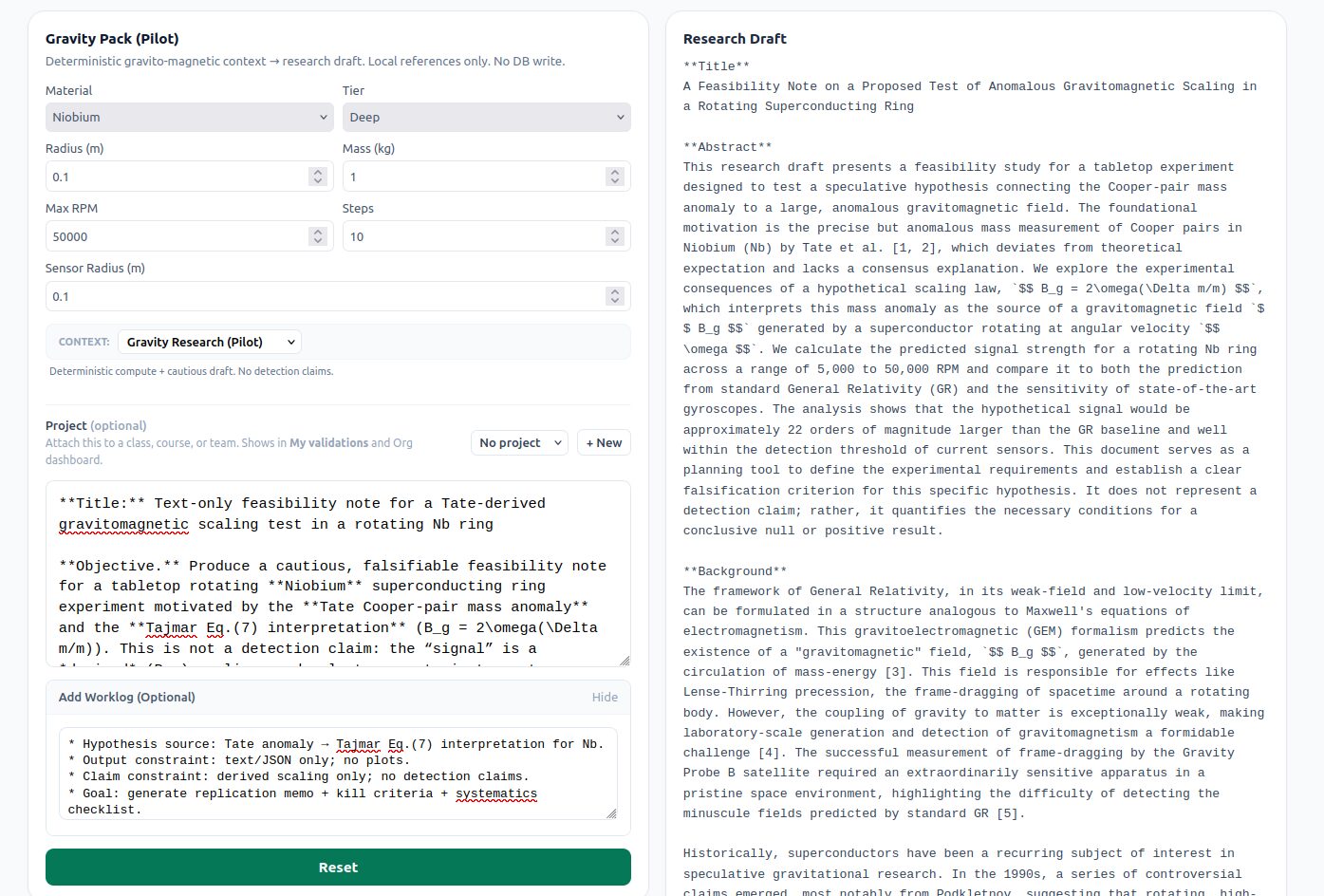
It brings together curated references, Python solvers, LoRA adapters, and AI orchestration into provenance-backed research packs. The goal is not just to produce text faster. The goal is to help researchers move from idea to testable draft with more structure, more transparency, and better process memory.
Quastra sits between notebook, literature review, simulation surface, and AI-native research workflow. It is designed for a new wave of independent researchers, small labs, founder-scientists, and open collaborations who want to move fast without giving up rigor.
Why this matters now
Serious research is no longer confined to large institutions. A new wave of independent researchers now has access to world-class models, public literature, coding environments, and orchestration tools. That is a historic opportunity.
But it also creates a new problem: if everything becomes easier to generate, weak work becomes easier to produce at scale.
So the frontier is not raw output. The frontier is disciplined acceleration: moving faster without becoming shallow, using AI without collapsing into simulation, and expanding access without lowering standards.
Stewardship, not autopilot
As AI becomes normal inside research and education, the key question is no longer simply whether AI was used. The deeper question is: who directed the process, verified the claims, corrected the errors, and stands behind the result?
That is why we keep returning to stewardship. The future of serious human-AI research will not be built on denial, nor on blind delegation. It will be built on visible process, careful checking, durable provenance, and human responsibility.
Current directions
Verification
Integrity workflows, audit layers, and provenance-backed research artifacts for AI-assisted work.
Simulation
Physics-native computation, aperiodic systems, gauge-theoretic structures, and solver-assisted exploration.
Discovery
AI-orchestrated research packs that connect references, models, code, and draft generation.
Independent science
Infrastructure for a new generation of open, fast, serious research outside legacy bottlenecks.
Explore the work
Read field notes, technical essays, papers, and product directions across AI, verification, geometry, quantum systems, and aperiodic design.